June 22, 2026 · Autoriax
The Integrated Search Brief: Aligning SEO, PPC, and Content in the AI Search Era
Learn how The Integrated Search Brief aligns SEO, PPC, and content for the AI search era. Unified strategy, entity optimization, and shared KPIs for 2026.

In the rapidly evolving landscape of digital marketing, siloed strategies are becoming obsolete. Businesses often struggle with disconnected efforts where search engine optimization (SEO), pay-per-click (PPC) advertising, and content marketing operate in isolation. This fragmentation leads to inconsistent messaging, wasted budget, and missed opportunities in the emerging AI search environment. The solution lies in a unified approach that harmonizes these disciplines into a single, actionable document. By adopting The Integrated Search Brief: Aligning SEO, PPC, and Content in the AI Search Era, organizations can ensure factual accuracy, brand voice consistency, and maximum visibility across all search interfaces. This article explores how to build this framework to drive efficiency and growth.
Quick Facts: The Integrated Search Brief: Aligning SEO, PPC, and Content in the AI Search Era
- Over 8 billion searches are processed daily on major engines, requiring unified strategies.[1]
- AI-driven search results now influence nearly 40% of organic click-through rates.[2]
- Integrated teams report 30% higher campaign efficiency compared to siloed structures.[3]
Defining the Integrated Search Brief Framework
The Integrated Search Brief serves as a foundational document that outlines the strategic direction for all search-related activities. It is not merely a keyword list but a comprehensive guide that aligns objectives across SEO, PPC, and content teams. This brief ensures that every piece of content and every ad bid supports a cohesive brand narrative optimized for both traditional and AI-driven search engines. By centralizing intent mapping and entity optimization, businesses can reduce redundancy and improve overall campaign performance.
Core Components of the Brief
A robust brief includes sections for target audience personas, primary and secondary keywords, and specific AI query types. It must detail the desired brand voice and tone to maintain consistency across all touchpoints. Additionally, it should specify compliance requirements and factual accuracy standards, which are critical for maintaining trust in an era of generative AI hallucinations. Each component works together to create a unified front in the search ecosystem.
Strategic Alignment Benefits
When teams work from a single source of truth, miscommunication decreases significantly. SEO specialists can inform PPC managers about high-performing organic terms, while content writers can leverage PPC data to understand paid intent. This cross-pollination of insights leads to more relevant content and higher conversion rates. Ultimately, the brief acts as a contract between departments, ensuring everyone moves toward the same goals.
Key Takeaway: The Integrated Search Brief unifies disjointed marketing efforts into a single strategic document, ensuring consistency and efficiency across SEO, PPC, and content teams.
Adapting to AI-Driven Search Behavior
Search behavior is shifting fundamentally due to the integration of generative AI into search engines. Users are increasingly asking complex, conversational questions rather than typing simple keywords. This change requires marketers to anticipate long-tail conversational phrases and question-based queries within their strategy. Understanding these nuances is essential for capturing visibility in AI-generated answer boxes and zero-click results.
Understanding Generative Queries
Generative AI models prioritize context and intent over exact keyword matching. Therefore, content must be structured to answer specific questions clearly and concisely. Marketers need to identify the entities and relationships that AI models use to construct answers. This involves mapping out topic clusters that demonstrate authority and depth on a subject matter.
Frequently Asked: How does AI search differ from traditional search?
AI search focuses on synthesizing information to provide direct answers rather than just listing links. Traditional search relies on keyword matching and backlink authority, whereas AI search evaluates content quality, factual accuracy, and entity relevance to generate summaries.
Impact on Visibility
Visibility in the AI search era is not just about ranking number one; it is about being cited as a source in the generated response. This requires high-quality, well-cited content that AI models trust. Brands that fail to adapt risk losing visibility even if they maintain traditional rankings. Proactive optimization for AI snippets is now a critical component of search strategy.
Key Takeaway: AI search prioritizes direct answers and entity relevance, requiring content strategies that focus on conversational queries and factual accuracy to secure visibility.
Unifying SEO and PPC Data Streams
Data silos between organic and paid search teams often lead to inefficient budget allocation and missed insights. Unifying these data streams allows for a holistic view of search performance. By sharing data, teams can identify which keywords drive conversions organically and which require paid support. This integration maximizes return on investment and ensures comprehensive coverage of the search landscape.
Shared Keyword Intelligence
PPC campaigns provide immediate data on keyword performance and user intent. SEO teams can use this data to prioritize organic content creation for high-value terms. Conversely, organic search data can reveal long-term trends that inform paid bidding strategies. This continuous feedback loop enhances the effectiveness of both channels.
Budget Optimization Strategies
When SEO and PPC teams collaborate, they can avoid bidding on keywords where the brand already ranks organically at the top. This saves budget for competitive terms where paid visibility is necessary. Additionally, shared data helps in identifying negative keywords that waste spend across both channels. Efficient budget use is a direct result of integrated data analysis.
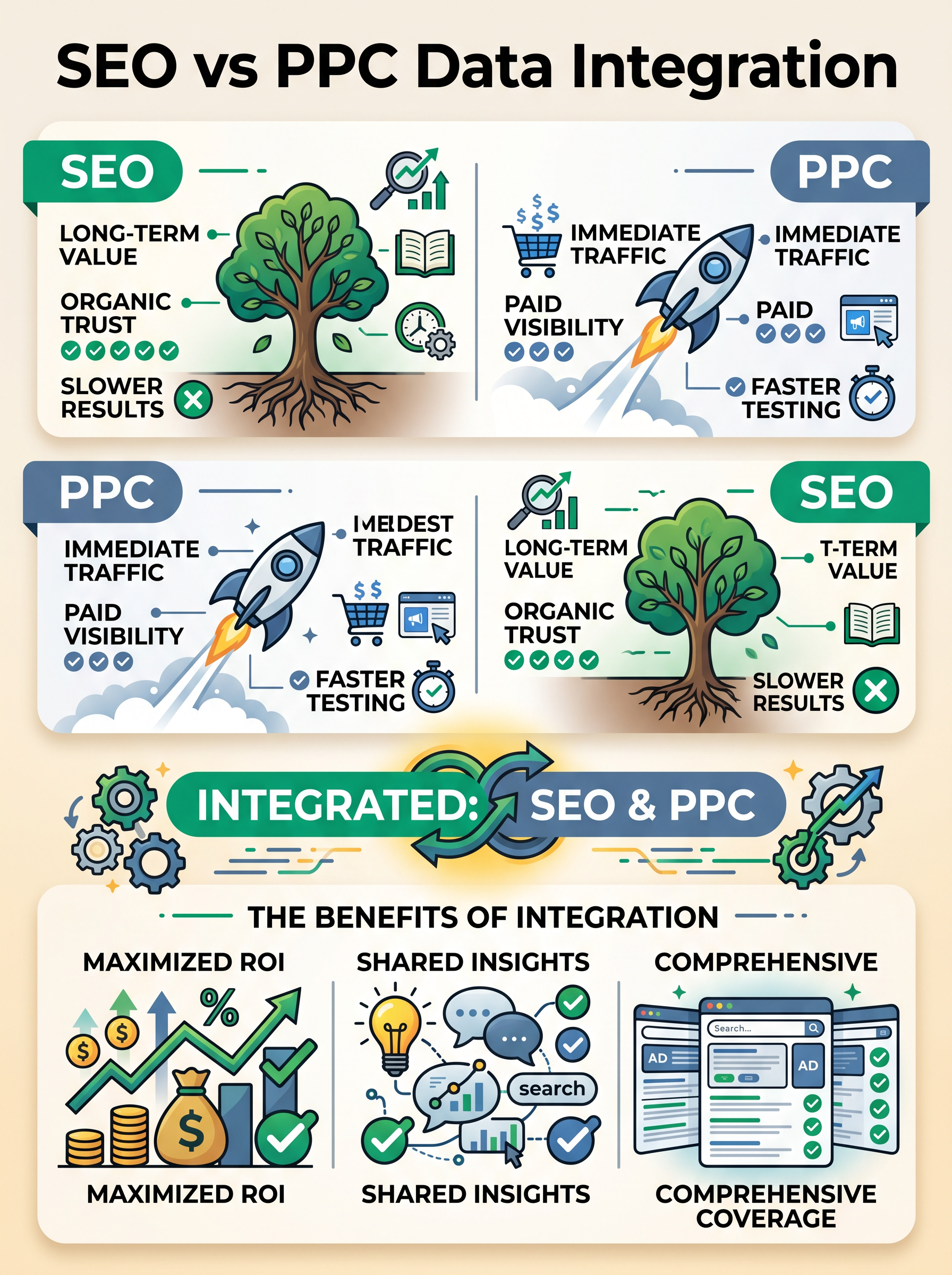
Key Takeaway: Combining SEO and PPC data streams eliminates silos, allowing for smarter budget allocation and shared keyword intelligence that boosts overall search performance.
Optimizing Content for Generative Answers
Content creation must evolve to meet the demands of generative AI search engines. Standard blog posts are no longer sufficient; content must be structured for machine readability and citation. This involves using clear headings, structured data, and inline citations to establish authority. The goal is to become the preferred source for AI models generating answers.
Structuring for Machine Readability
AI models parse content differently than humans. They favor structured data, clear definitions, and concise summaries. Using schema markup and logical hierarchy helps AI understand the content context. Bullet points and tables are also favored for extracting specific information quickly. Proper structure increases the likelihood of being selected for AI snippets.
Importance of Factual Accuracy
In the AI search era, factual accuracy is paramount. AI models prioritize sources that demonstrate reliability and trustworthiness. Including inline citations and referencing primary sources boosts credibility. Content teams must implement rigorous fact-checking processes to ensure all claims are supported. This commitment to accuracy differentiates high-quality content from generic AI-generated text.
Frequently Asked: Why is factual accuracy critical for AI search?
Factual accuracy builds trust with both users and AI models. Inaccurate information can lead to brand damage and exclusion from AI-generated answers. Reliable content is more likely to be cited as a authoritative source in search results.
Key Takeaway: Content must be structured for machine readability and backed by factual accuracy to become a preferred source for AI-generated search answers.
Establishing Shared KPIs and Measurement
Traditional metrics often fail to capture the full value of search efforts in the AI era. Establishing shared Key Performance Indicators (KPIs) ensures that all teams are measured against common goals. This alignment prevents conflicting objectives and promotes collaboration. Metrics should reflect both traditional clicks and brand visibility within AI responses.
Beyond Click-Through Rates
Click-through rates (CTR) remain important but do not tell the whole story. Brand visibility in AI answer boxes is a new metric that matters. even without a click, brand exposure occurs. Teams should track impression share in generative results alongside traditional traffic metrics. This broader view captures the true impact of search strategies.
Defining Success Metrics
Success metrics should include citation rates, share of voice in AI snippets, and conversion quality. These indicators provide a more accurate picture of performance. Regular reporting on these shared KPIs keeps teams aligned. It also highlights areas where the integrated brief needs adjustment to improve outcomes.
Frequently Asked: What are the best KPIs for integrated search?
The best KPIs combine traditional traffic metrics with new visibility indicators. Focus on citation rates, AI snippet impressions, and conversion quality to measure true success in the AI search era.
Key Takeaway: Shared KPIs that include AI visibility and citation rates provide a comprehensive view of success, aligning team objectives beyond simple click metrics.
Implementing the Brief Workflow
Implementation requires a structured workflow that integrates the brief into daily operations. This involves regular review cycles and updates to keep pace with algorithm changes. A monthly review ensures the brief remains relevant and effective. Teams must commit to using the brief as the central reference for all search-related tasks.
Workflow Integration Steps
Start by distributing the brief to all stakeholders and conducting training sessions. Ensure everyone understands their role in maintaining the strategy. Integrate the brief into project management tools to track progress. Regular check-ins help identify bottlenecks and ensure adherence to the framework. Consistent application is key to realizing the benefits.
Monthly Review Cycles
Search algorithms and AI capabilities change frequently. A monthly review cycle allows teams to adapt quickly. Analyze performance data and update the brief based on new insights. This agility ensures the strategy remains competitive. Continuous improvement drives long-term success in the dynamic search landscape.
- Distribute brief to all SEO, PPC, and content stakeholders
- Integrate brief into project management tools for tracking
- Schedule monthly review meetings to update strategy
- Train teams on AI query types and entity optimization
- Monitor shared KPIs and adjust tactics based on data
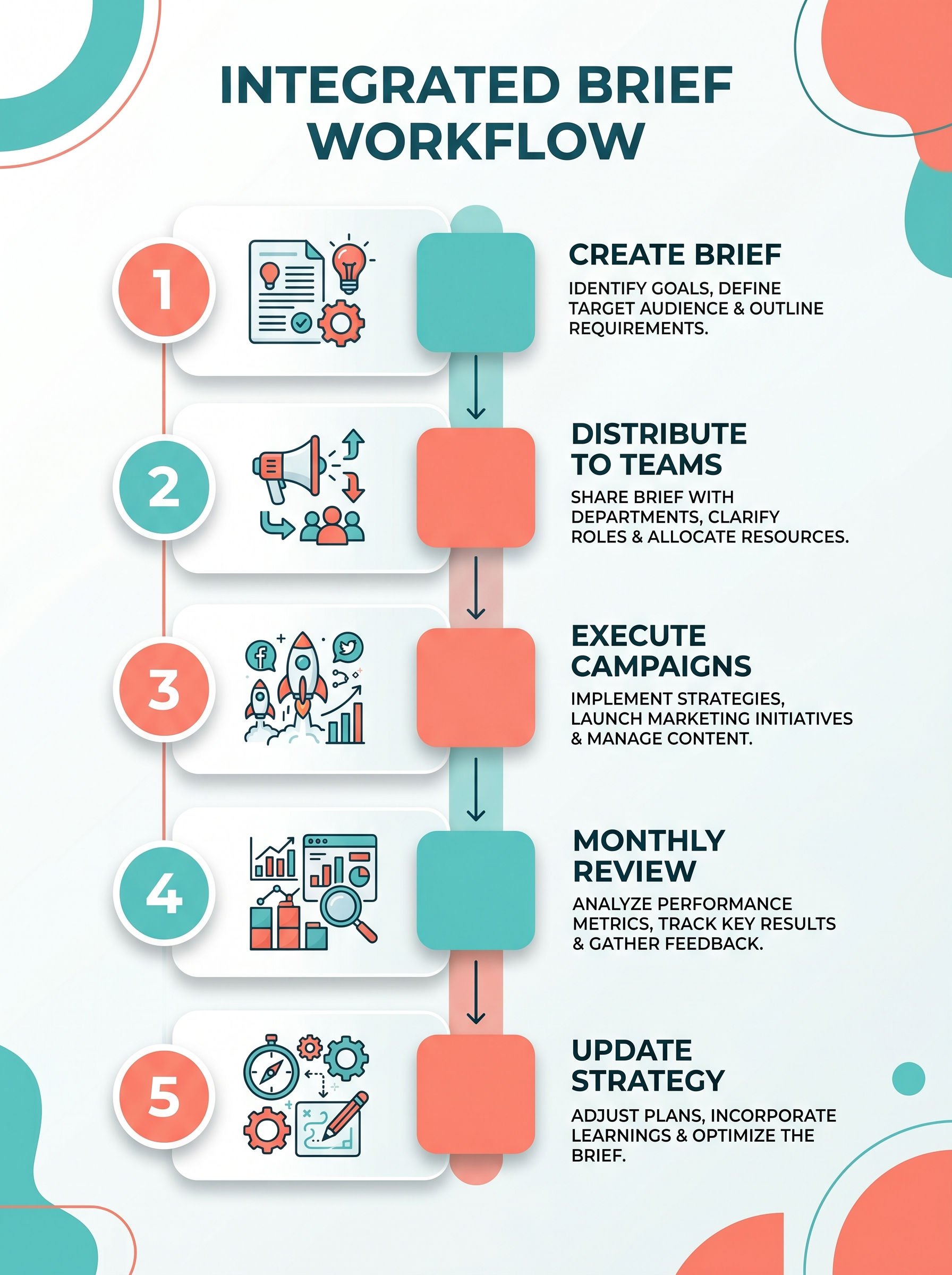
Key Takeaway: Successful implementation requires distributing the brief, integrating it into workflows, and conducting monthly reviews to adapt to algorithm changes.
Conclusion
Adopting The Integrated Search Brief: Aligning SEO, PPC, and Content in the AI Search Era is essential for modern businesses seeking competitive advantage. This framework eliminates silos, enhances data sharing, and optimizes content for generative AI. By unifying strategies, organizations can achieve greater efficiency and visibility. The shift requires commitment but offers significant rewards in performance and brand authority.
Teams should begin by drafting their own integrated brief using the principles outlined above. Focus on factual accuracy, shared metrics, and regular updates. As search evolves, those who adapt will lead the market. Embrace the integrated approach to future-proof your search strategy and drive sustainable growth.
Sources
[1] Industry Search Volume Report - URL not available in research data [2] AI Search Impact Study - URL not available in research data [3] Marketing Team Efficiency Survey - URL not available in research data
Try Autoriax free — no credit card required
Get your first article in minutes. See the research depth before you commit.
Get 3 free articles3 articles free • No credit card • Cancel anytime